Hadco Low Voltage Lighting Transformer Manual
- Hadco Low Voltage Lighting Transformer Manual Pdf
- Hadco Lighting
- Hadco Low Voltage Lighting Transformer Manual
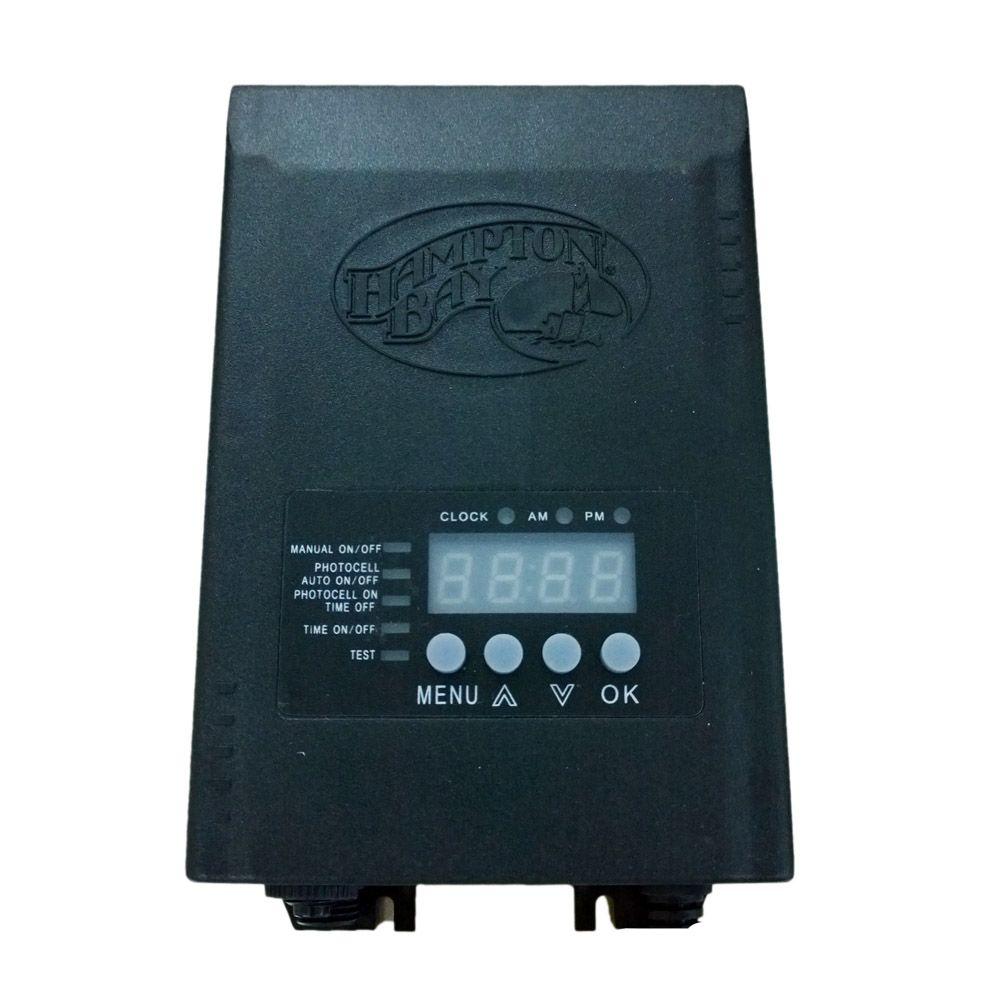
I bought this transformer which was represented as a CAST Journeyman, but i'm pretty sure that is not the case. At least I can't find anything exactly like this on their website, or the web.
I'm proceeding with a return, but would like to know what I got and if it might be a good option to keep? I've searched high and low and can't find an image with this configuration anywhere. I guess one big question is whether it is a torodial or laminated? Hope one of you pros can help. This is what information I have: Low Voltage Power Control Console Model - 30600 Input: 120V 60hz 5.0 A Output 12V-13V-14V-15V Max Rating: 600W (2 x 300W.) Operating Instructions There are timer instructions beside a picture of the timer which is a GRASSLIN Also states: Isolated Winding Type Transformer UL listed 8837 Landscape Transformer Low Voltage E140548 Suitable for Wet Locations Inside contains a sticker that says Made in India and the date 2011.
Not included in the picture is a stainless steel cover (not hinged) that slides up to cover the taps. I would hazzard to guess that it is an 'off brand' unit that was made by MDL. The 'made in India' sticker gives that away. It is not all that uncommon for transformer manufacturers to build generic transformers that are then sold in quantity to 're-sellers'. MDL, Justin, 3Able, and Pantech all do this to differing degrees. What would concern me about installing or using this product is that you cannot trace it back to any one manufacturer or distributor and that it would appear to be inappropriately listed for use as a landscape lighting (garden lighting) transformer. Given its questionable source, I would not take the risk of installing it on a client's property.
Keep it at your shop as a test bench unit and buy something legitimate for use on your client's properties.
You've pulled out all the stops to make your house and yard look first-rate. So why let that hard work disappear at nightfall when, with a flick of a switch and some strategically placed landscape lights, you can roll back the darkness and put it all on display? Done right, landscape lighting makes the best of what you've got by highlighting your home's architectural features and drawing attention to prized plantings and trees. Most landscape lighting today is low voltage, and with good reason. Unlike 120-volt systems, it's safer to work with and less costly to install. And though low-voltage lights receive one-tenth the power, thanks to a step-down transformer, there's no limit to the effects they can achieve, from ethereal moonlight beamed down from a tree canopy to a subtle glow that washes over a low garden wall. More than just picking the right hardware, a pleasing lighting scheme is also about artistry.
Shown: Underlit trees and accent lights aimed at the facade create an inviting post-sunset atmosphere around this home. Landscape lighting typically relies on stepped-down power from your house. Transformer: Reduces 120-volt household current to a safer 12 volts. Bulb: Determines a light's brightness, color, and beam width, as well as electricity usage. Fixture Housing: Protects bulb from elements and helps shape light beam. Stake Holds the fixture in place. Cable: Carries current to light through fixture's lead wires.
Underlit trees and accent lights aimed at the facade create an inviting post-sunset atmosphere around this home. DIY or Hire a Pro? Homeowners can put in a simple system in a weekend. For the most stunning effects, go with a landscape lighting specialist familiar with the various fixtures and ways to arrange them.
What's it Cost? Individual fixtures start around $20. Cables run 70 cents per foot, and a transformer can be had for about $200. A 10-light system installed by a pro typically starts at about $2,000 to $2,500. How Much Upkeep?
Keep fixtures free of leaves and debris to prevent them from overheating. Replace burned-out bulbs immediately so that others on the circuit aren't subject to life-shortening voltage overloads. How Long Will They Last?
Warranties on fixtures and transformers range from one to 10 years, but fixtures made of brass, copper, or stainless steel should shine indefinitely. If you don't want to lift a finger, go with a pro. (Find one through the.) But homeowners willing to invest a little of their own time and energy can save a bundle by following the advice of Mark Piantedosi, owner of in Acton, Massachusetts.
Here are his top design tips: Trees (well, bullet, or flood, and downlight). When aiming ground lights straight up into foliage, be sure to also bathe the trunk in light. If you don't, the uplit crown will look like a hovering UFO.
When illuminating foliage from above, place two 20-watt downlights as high in a tree as possible and point them so that their beams do not cross. Planting Beds (garden). Place fixtures no closer than 20 feet apart.
'You want pools of light to guide your eye from one plant to the next, not continuous illumination.' Home Facade (bullet and wash).Fit bullet lights with bulbs that have 12-degree beam spreads, and aim them at the corners of your house or architectural details; softer wash lights can fill in the space between them. Garden Walls (well, bullet, or flood).Position fixtures close to the base so that the beams bring textures into sharp relief. Focal Points (flood, bullet, or wash). Highlight an element that deserves attention—such as a fountain, a tree swing, or an arbor—by aiming two or more lights at it. The crossing beams reduce the harsh shadows that form when only one shines on an object.
For more outdoor-lighting design ideas, visit or consult the classic guide. With no filament to break or burn out, LEDs can last 40,000 hours, approximately 20 years of regular use, compared with just two years for halogen bulbs. LEDs are also extremely efficient, sipping 1 to 11 watts of power versus 20 to 60 watts for halogens. That means lower installation costs due to smaller transformers and cables, lower operating costs, and reduced maintenance, for up to a 50-percent savings over halogen systems in the course of 15 years. But LEDs have their drawbacks, chiefly their high initial cost—about $40 per bulb, compared with about $5 for a similar halogen.
Also, many LEDs have a cold blue light with a color temperature around 6,000 K (kelvins). Look instead for a warm-color temperature, about 3,000 K. And don't forget to look at light output, in lumens, to make sure you're getting enough brightness. LED performance is improving, but it still lags behind that of halogens. Dismal output is the biggest knock against solar-powered fixtures, which all use LEDs. They might have enough glow to define a garden edge but not to light up your house. Where to buy?
All the components you need are available online at sites such as. What skills do you need? Digging trenches and connecting fixtures and cables is straightforward stuff. But if you don't have a 20-amp GFCI-protected outdoor receptacle to plug the transformer into, hire a licensed electrician to install one. What size transformer?
To determine the watt-capacity of your transformer, add up the total wattage of all the lights you plan to install and multiply by 1.25. How to control the lights? Timers are the most reliable automatic switches; the best ones adjust for seasonal changes in day length. Wireless keypads and fobs are convenient ways to manually control your lights and, unlike hardwired switches, don't require an electrician to install them.
How to ensure uniform brightness? Attaching fixtures to one cable in a daisy chain can overpower the lights closest to the transformer and leave the last few power-starved and dim. The solution: Run a 10-gauge cable out to a hub—a waterproof junction box—and branch out with equal lengths of 12-gauge cable. Keep the runs under 50 feet, and power should arrive at halogen fixtures in their sweet spot: 10.8 to 11.5 volts (for LEDs, 8 to 15 volts).
Low-voltage cables (left) must be buried at least 6 inches deep. A plastic spike (center) anchors the fixture (right) in the ground. Similar to shown: Frosted Globe walk light by Malibu with 11-watt bulb, about $20. You've pulled out all the stops to make your house and yard look first-rate. So why let that hard work disappear at nightfall when, with a flick of a switch and some strategically placed landscape lights, you can roll back the darkness and put it all on display? Done right, landscape lighting makes the best of what you've got by highlighting your home's architectural features and drawing attention to prized plantings and trees.
Most landscape lighting today is low voltage, and with good reason. Unlike 120-volt systems, it's safer to work with and less costly to install. And though low-voltage lights receive one-tenth the power, thanks to a step-down transformer, there's no limit to the effects they can achieve, from ethereal moonlight beamed down from a tree canopy to a subtle glow that washes over a low garden wall. More than just picking the right hardware, a pleasing lighting scheme is also about artistry.
Hadco Low Voltage Lighting Transformer Manual Pdf
Shown: Underlit trees and accent lights aimed at the facade create an inviting post-sunset atmosphere around this home. Landscape lighting typically relies on stepped-down power from your house. Transformer: Reduces 120-volt household current to a safer 12 volts. Bulb: Determines a light's brightness, color, and beam width, as well as electricity usage. Fixture Housing: Protects bulb from elements and helps shape light beam.
Stake Holds the fixture in place. Cable: Carries current to light through fixture's lead wires. Underlit trees and accent lights aimed at the facade create an inviting post-sunset atmosphere around this home.
DIY or Hire a Pro? Homeowners can put in a simple system in a weekend. For the most stunning effects, go with a landscape lighting specialist familiar with the various fixtures and ways to arrange them. What's it Cost? Individual fixtures start around $20. Cables run 70 cents per foot, and a transformer can be had for about $200. A 10-light system installed by a pro typically starts at about $2,000 to $2,500.
How Much Upkeep? Keep fixtures free of leaves and debris to prevent them from overheating. Replace burned-out bulbs immediately so that others on the circuit aren't subject to life-shortening voltage overloads. How Long Will They Last? Warranties on fixtures and transformers range from one to 10 years, but fixtures made of brass, copper, or stainless steel should shine indefinitely. If you don't want to lift a finger, go with a pro. (Find one through the.) But homeowners willing to invest a little of their own time and energy can save a bundle by following the advice of Mark Piantedosi, owner of in Acton, Massachusetts.
Here are his top design tips: Trees (well, bullet, or flood, and downlight). When aiming ground lights straight up into foliage, be sure to also bathe the trunk in light. If you don't, the uplit crown will look like a hovering UFO. When illuminating foliage from above, place two 20-watt downlights as high in a tree as possible and point them so that their beams do not cross. Planting Beds (garden).
Place fixtures no closer than 20 feet apart. 'You want pools of light to guide your eye from one plant to the next, not continuous illumination.'
Hadco Lighting
Home Facade (bullet and wash).Fit bullet lights with bulbs that have 12-degree beam spreads, and aim them at the corners of your house or architectural details; softer wash lights can fill in the space between them. Garden Walls (well, bullet, or flood).Position fixtures close to the base so that the beams bring textures into sharp relief. Focal Points (flood, bullet, or wash).
Hadco Low Voltage Lighting Transformer Manual
Highlight an element that deserves attention—such as a fountain, a tree swing, or an arbor—by aiming two or more lights at it. The crossing beams reduce the harsh shadows that form when only one shines on an object. For more outdoor-lighting design ideas, visit or consult the classic guide. With no filament to break or burn out, LEDs can last 40,000 hours, approximately 20 years of regular use, compared with just two years for halogen bulbs. LEDs are also extremely efficient, sipping 1 to 11 watts of power versus 20 to 60 watts for halogens.
That means lower installation costs due to smaller transformers and cables, lower operating costs, and reduced maintenance, for up to a 50-percent savings over halogen systems in the course of 15 years. But LEDs have their drawbacks, chiefly their high initial cost—about $40 per bulb, compared with about $5 for a similar halogen. Also, many LEDs have a cold blue light with a color temperature around 6,000 K (kelvins).
Look instead for a warm-color temperature, about 3,000 K. And don't forget to look at light output, in lumens, to make sure you're getting enough brightness. LED performance is improving, but it still lags behind that of halogens. Dismal output is the biggest knock against solar-powered fixtures, which all use LEDs.


They might have enough glow to define a garden edge but not to light up your house. Where to buy? All the components you need are available online at sites such as. What skills do you need? Digging trenches and connecting fixtures and cables is straightforward stuff. But if you don't have a 20-amp GFCI-protected outdoor receptacle to plug the transformer into, hire a licensed electrician to install one.
What size transformer? To determine the watt-capacity of your transformer, add up the total wattage of all the lights you plan to install and multiply by 1.25. How to control the lights? Timers are the most reliable automatic switches; the best ones adjust for seasonal changes in day length. Wireless keypads and fobs are convenient ways to manually control your lights and, unlike hardwired switches, don't require an electrician to install them.
How to ensure uniform brightness? Attaching fixtures to one cable in a daisy chain can overpower the lights closest to the transformer and leave the last few power-starved and dim. The solution: Run a 10-gauge cable out to a hub—a waterproof junction box—and branch out with equal lengths of 12-gauge cable.
Keep the runs under 50 feet, and power should arrive at halogen fixtures in their sweet spot: 10.8 to 11.5 volts (for LEDs, 8 to 15 volts). Low-voltage cables (left) must be buried at least 6 inches deep. A plastic spike (center) anchors the fixture (right) in the ground. Similar to shown: Frosted Globe walk light by Malibu with 11-watt bulb, about $20.