Us Model Of 1917 Eddystone Manual
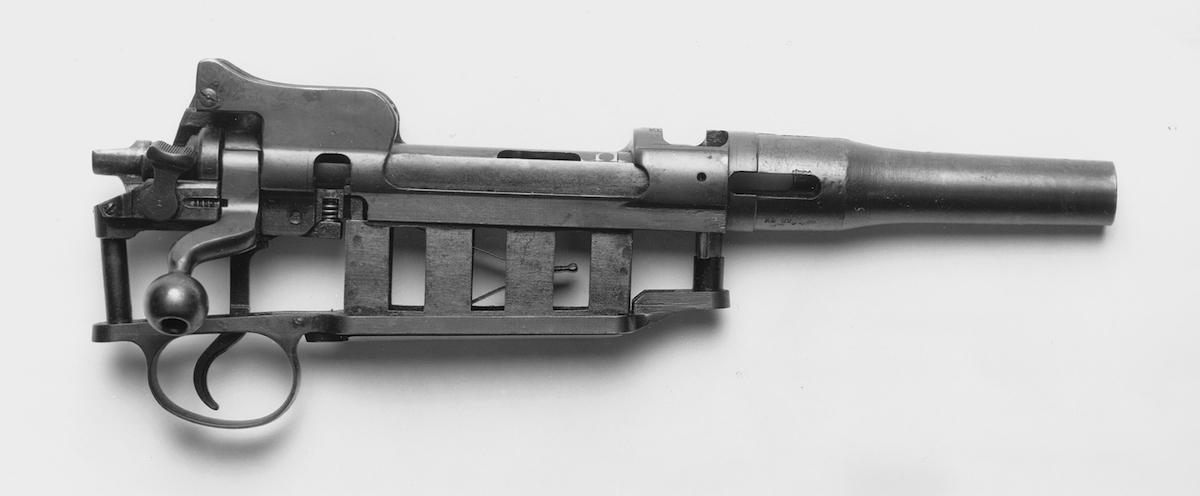
US M1917 Enfield Many people believe the standard issue rifle for US forces in WWI was the 1903 Springfield and this is PARTIALLY true, however when the USA entered the war they only had around 600,000 of those rifles available, and they were not being mass produced. Remington, Eddystone, and Winchester were all producing British Pattern 14 Rifles (later reclassified as No3 Rifles as for 1924) for their troops, and in 1917 their orders had been largely fulfilled. The USA did not have the tooling to mass produce Springfield 1903's to complement the draft numbers required for WWI deployments. But what they did have was the tooling to manufacture an American Enfield based on the P14 which was officially adopted and name US Rifle Caliber 30 Model of 1917, also known as the Enfield M1917, American Enfield, and or the P17. It also seems to be the very rifle used by Alvin York when he killed 28 German infantry in emplaced machine gun bunkers/trenches, and captured 138 German infantry in all.
At the end of WWI around 1 million 1903 Springfield rifles were distributed and over 2.5 million M1917 Enfield rifles were distributed, making the Enfield M1917 truly the American Service Rifle of WWI. M1917 Enfield M1917 Enfield Rear Peep Sight M1917 Enfield Front Post Sight M1917 Enfield 'Marksman' Variant M1917 Enfield 'Sniper' Variant Its interesting to note that this rifle also has a 6 round internal magazine, and yes I do mean 6 not 5, this is not +1 in the chamber. It featured a modified Mauser action with an Enfield SMLE charge on close system similar to the SMLE No1 Mk 3. This made for a very robust, reliable, and fast action, coupled with the high power of the.30-06 cartridge, so for my suggestion here are the following parameters for this rifle. Largest sweet spot, most sniper rifle ammo total, second highest fire rate? It need a little revision but this gun is hype.
According to the charts at symthic the M1903 has the best sweet spot with 50m of distance starting at 100 meters and extending out to 150m for 100 damage. This is followed up closely by the Gewehr 98 with 100 damage at 80m and extending out to 123 meters for a total sweet spot of 43 meters. What I did was make the range different from the Springfield 1903 by making it better 20m closer with the same falloff and sweet spot distance.
The M1917 was not common to see as a sniper platform, it was mainly an infantry rifle, however as previously posted there are sniper variants and they were well known for their accuracy. Most sniper ammo total? Nope, that goes to the Enfield SMLE No1 Mk 3 with 10. Second highest rate of fire, no its not, the Springfield 1903 has a ROF of 53, the Gewehr 95 has a ROF of 66 and the Russian 1895 with a ROF of 64. However I will revise it to match the Enfield SMLE No 1 Mk 3, it should be identical to that as it uses a very similar type of action just modified. There is another point to this rifle I failed to mention, it reloads using a 5 round stripper clip then a final 6th bullet is manually added into the internal magazine, this would make its empty reload slightly longer, thus balancing itself out in that sense while keeping it realistic. Here is Hickok45 with a real M1917 Enfield explaining why it was capable of holding 6 rounds in the magazine instead of 5 even though the stripper clips still only held 5 rounds.
The US manufacturers were NOT producing the no1mk3. They were producing the eddystone enfield in.303 british (a design that was hoped to replace the smle, but did not. It was later classified as the no3. The British later developed the no4 used in ww2). US manufacturing decided it was easier to change the eddystone to 30-06 chambering than to switch over to the m1903.
The US did produce no4 mk1s for the British during WW2 for the lend lease program. I actually own one of these from savage. It has 'US Property' stamped into the receiver. The US manufacturers were NOT producing the no1mk3. They were producing the eddystone enfield in.303 british (a design that was hoped to replace the smle, but did not.
It was later classified as the no3. Corrections academy study guide. The British later developed the no4 used in ww2). US manufacturing decided it was easier to change the eddystone to 30-06 chambering than to switch over to the m1903.
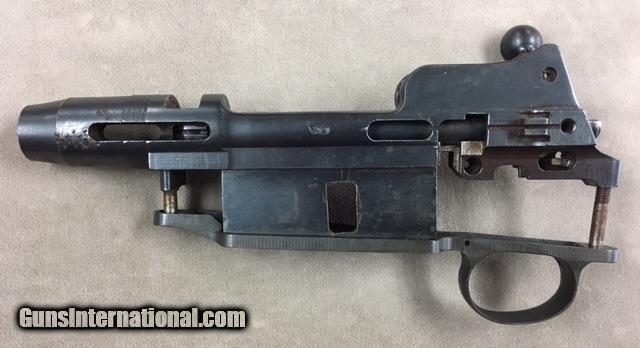
The US did produce no4 mk1s for the British during WW2 for the lend lease program. I actually own one of these from savage. It has 'US Property' stamped into the receiver. My mistake on the No 1 Mk 3, they were building the P14 which had no interchangeability due to the different tooling between the companies making them, the British still bought and serviced them however, and in 1924 they were renamed to the No3 Enfield, this is where I got confused.
The P17 is the M1917 (they are literally the same exact firearm, just a different name), this is what the US was making due to the demand for rapid production rifles, and it was chambered in.30-06 which was the US standard round for the time. Interestingly most if not almost all of the tooling issues were non-existent in the early mid to late P17 models from what RIA (Rock Island Auctions) was able to discern, and they are an excellent authority on antiquated firearms.
Will update original post to reflect changes. My interest is what the British thought they were improving upon with the p17?
I forget but if irc, they were a variant on the mauser design which was apparently so good even the British doubted their own design in the smle, which I guess they figured out later was in error. I have to do more reading.
Having used both actions, I don't know why anyone would take a mauser action over a lee enfield. I am biased though, as I believe the no4mk1 was the best military bolt rifle ever produced. Many military history experts agree the P17 (M1917 American Enfield) was the best bolt action of WW1.
The only 2 major drawbacks to the P17 were its weight and length, however this also gave it 3 positive attributes at certain points. Longer barrel for.30-06 meant higher velocity making ranged fire more accurate due to less drop and windage compensation 2. Longer length overall meant when using a US Bayonet it provided more reach over other carbine rifles 3. Heavier weight mitigated the massive recoil of the.30-06 cartridge which is more stout that the 8mm Lebel and the British.303, about on par with 7.92x57 Mauser. The Enfield rifles were and still are superb rifles, I have shot 3 different variants including the rare jungle carbine variant, and especially the No 4 Mk 1 which has one of the quickest rotating manual bolts I have ever shot. However the sights on that P17 are exactly what is needed and in fact those ring/peep sights are what are used by modern military forces around the world. This is something that could be well represented in Battlefield 1, the M1917 with its sights with radium inlay's would be phenomenal to use.
So would I have a 6 bullet clip reload of you emptied the mag? Id hate to empty the mag and then have to load that last bullet in manually every time Although the chamber can hold 6 rounds, I don't think infantry would have loose rounds in their pockets to load a single round after they loaded 5 using a stripper clip. I would really like if they included this rifle in the game. I have a Winchester M1917, and it's very fun to shoot. Also have a Mosin Nagant (hope it's included in the next DLC), an Enfield No1 MKIII, a 1903A3 (same as the 1903, but different sights), and a K98 (more or less the same as the Gew98, but shorter and different rear sight). All of those rifles are very fun to shoot, although the bolt of the Mosin is very sticky, and sometimes kind of hard to open after firing a round. I'd like to have some more American guns, not that I have a problem with the guns from other countries.
(quite a fan of the Italian guns) Hopefully, if this gun was added, maybe an iron sight version? I do better with iron sight rifles in this game. From what I read in many gun forums, the M1917 had the best sights in WWI, although it didn't have windage.
The peep sights that the M1917 had, was the base of the sights of the M1 carbine, M1 Garand and M14. Front sight of the 1903 was very fragile, and the M1917 was very robust.
Why they included the 1903 and not the M1917, is a mystery. Also, although is basically the same rifle, they should include the P14 too. So would I have a 6 bullet clip reload of you emptied the mag?
Id hate to empty the mag and then have to load that last bullet in manually every time Although the chamber can hold 6 rounds, I don't think infantry would have loose rounds in their pockets to load a single round after they loaded 5 using a stripper clip. I would really like if they included this rifle in the game. I have a Winchester M1917, and it's very fun to shoot. Also have a Mosin Nagant (hope it's included in the next DLC), an Enfield No1 MKIII, a 1903A3 (same as the 1903, but different sights), and a K98 (more or less the same as the Gew98, but shorter and different rear sight). All of those rifles are very fun to shoot, although the bolt of the Mosin is very sticky, and sometimes kind of hard to open after firing a round. The Mosin Nagant is confirmed.
Marksman variant is there and so is the infantry in the gameplay I saw.
Although the U.S. Model of 1903 Springfield was standard-issue before World War I, it is estimated that three-quarters of the “doughboys” carried the U.S.
Model of 1917 rifle in France. In April 1917, when the United States was faced with active involvement in the war raging in Europe, our military lacked many of the essential arms necessary to fight the determined and experienced enemy. One of the most pressing deficiencies in Uncle Sam’s arsenal was service rifles.
While the standard U.S. Military rifle at the time was the excellent Springfield Model of 1903 (July 2018, p. 48), there were only some 600,000 on hand, far short of the number necessary to arm the rapidly expanding American military. Springfield Armory immediately took steps to increase manufacture as rapidly as possible. Rock Island Arsenal had manufactured the Model 1903 rifle from 1903 until 1913, when its rifle production program was discontinued. Rock Island began preparations to revitalize its moribund ’03 rifle assembly line, but the shortage of experienced personnel and the lack of raw materials hampered efforts in this regard.
It was painfully obvious our armed forces would soon be facing a crippling shortage of modern service rifles unless other steps were taken. Some 160,000 obsolete U.S.30-40 Krag rifles were taken out of mothballs, primarily for use as training rifles for the flood of recruits and draftees inundating training camps across the country, but this was only a stopgap measure. Clearly, another source of rifles needed to be found, and time was of the essence. The War Dept. Had two basic options for the procurement of additional rifles. One was to seek commercial manufacturers that could produce Model 1903 rifles under government contract. It was soon determined, however, that the lag time required to find suitable manufacturers, negotiate production contracts, train new workforces from scratch, and acquire the necessary production machinery and raw materials would be too great.
The second option would be to adopt another type of rifle that was already in production to augment the Model 1903. Ultimately, the government had little choice but to pursue the second option. The fates of war smiled on the United States at that time, as there was an available source of rifles. Three American firms—Winchester, Remington and Eddystone (an affiliate of Remington)—were completing the manufacture of large numbers of Pattern 1914.303 British bolt-action rifles for the British government. The machinery and trained workforces were still largely intact, and the three firms could resume production of the Pattern 1914 rifle for the United States with little delay.
Us Model Of 1917 Eddystone Manual Do Mundo
Despite this fortuitous situation, the War Dept. Was immediately faced with another conundrum. In order to put the maximum number of rifles into the hands of our armed forces in the minimum amount of time, the government initially considered adopting the.303 British Pattern 1914 rifle “as is.” That course of action, though, would have resulted in logistical headaches, as it would have required two types of ammunition to be produced and issued.
Also, it was widely believed that the British.303 cartridge was inferior to the American.30-’06 Sprg. Those considerations resulted in a decision to modify the British rifle to be chambered for the standard American.30-cal. Model of 1917 rifle was based on the British Pattern 1914 rifle in.303 British. Changes were necessary to chamber the rifle in the U.S. Service cartridge,.30-’06 Sprg.
The M1917 had an aperture rear sight (left), adjustable for elevation. Unlike the ’03 Springfield, the M1917 cocked on closing. The modified rifle was adopted as the “U.S. Rifle, Caliber.30, Model of 1917,” sometimes referred to today as the “Pattern 1917” or “P17” rifle. This nomenclature is factually and historically incorrect, as the U.S. Military never used the term “Pattern” or “P” to designate arms.
The official nomenclature was either “Model of 1917,” “Model 1917” or “M1917.” The rifle is also widely called the “U.S. Enfield” or, sometimes, just the “Enfield.” It is interesting to note that a 1942 field manual (FM 23-6) was titled “U.S. Rifle, Caliber.30, M1917 (Enfield).” The Model 1917 rifle weighed 9 lbs., 3 ozs., with a 26' barrel, and it had an overall length of 46 1/4'.
The rear sight was a folding leaf, adjustable for elevation, but not windage. The magazine capacity was six rounds, although it was typically loaded with the same five-round stripper clip as the Model 1903 Springfield rifle. The Pattern 1914 bayonet was also adopted by the United States as the “Bayonet, Model of 1917.” The bayonets were manufactured by Winchester and Remington, but, for whatever reason, none were made by Eddystone.
Some of the Pattern 1914 bayonets made for the British were procured by the U.S. Military and over-stamped with American martial markings. When it was announced that the new rifle had been adopted, the War Dept.
Received some criticism due to the delay in procuring the badly needed rifles because of the time it would take to finalize the engineering procedures involved in the change from.303 British to.30-’06 Sprg. In retrospect, this was unquestionably the correct decision. In 1919, Assistant Secretary of War Benedict Crowell stated, “The decision to modify the Enfield was one of the great decisions of the executive prosecution of the war—all honor to the men who made it.” Immediately after its adoption, the three manufacturers began preparations to convert from Pattern 1914 production to manufacture of the Model 1917 as expeditiously as possible. On May 10, 1917, each manufacturer submitted a prototype sample of the modified rifle to Springfield Armory for evaluation. Even though, from an engineering and technical aspect, converting from.303 to.30-’06 wasn’t particularly difficult, it was determined there were problems with each of the rifles.
One of main issues was lack of interchangeability of components due to the fact that some of the parts on the prototype rifles were hand-fitted. Even with the pressing need for rifles, the Ordnance Dept., understandably, insisted that the parts be interchangeable and instructed each maker to improve their manufacturing techniques before going into mass production. On July 12, 1917, the manufacturers submitted a second sample rifle to Springfield. Each sample reflected some degree of improvement, but it was determined that more refinement was needed. The Ordnance Dept.
Gave each company the option of proceeding with quantity production while working on the interchangeability issues or delay manufacture until the problems could be rectified. Remington and Eddystone elected to delay production, but Winchester chose to proceed without delay. As events transpired, Winchester should have been a bit more judicious. Assistant Secretary of War Benedict Crowell later remarked: “It would have been well if the same course of action wait for final specifications had been followed at the Winchester plant, for word came later from Europe not to send over any rifles of Winchester manufacture during that period.”. Markings on the receiver ring indicate which of the factories—Winchester, Remington or Eddystone—made the rifle. The earliest Winchester-made rifles, about 5,000, only bore a “W” (below, r.), as was specified on the British-contract Pattern 1914 rifles.
It should not be inferred that the Winchester-made rifles were not functional, but, rather, the interchangeability issues caused logistical problems for Ordnance units in France. Even though the troublesome interchangeability problems were never completely resolved, once the standardized engineering drawings and specifications were completed, an acceptable rate of 95 percent interchangeability of parts was achieved by all the manufacturers. The later Winchester Model 1917 rifles were equal in quality and interchangeability to those made by the other two makers. It is interesting to note that unlike Remington and Eddystone, very-early-production Winchester Model 1917 rifles (approximately the first 5,000) were marked on the receiver ring with just the initial of the maker—“W”—as was the case with the British Pattern 1914 rifles, but that was soon changed to the full name “Winchester.” There was a perception by some that the newly adopted rifle was not suitable for use by our military. As an example of that mindset, there was an article published in the New York Times titled, “Why our forces in France must use an inferior rifle.” The article stated a number of misleading, if not outright false, “facts” regarding the Enfield. The magazine Arms And The Man, predecessor to The American Rifleman, subsequently published an article that refuted the New York Times’ flawed piece and detailed the valid reasons for the adoption of the Model 1917 rifle.
Along with the rifle, the War Dept. Adopted the M1917 bayonet, which had a 17'-long blade.
The bayonets were made by Remington and Winchester. The same bayonet could also be used on trench shotguns. While both the Model 1917 and Model 1903 rifles were bolt-actions, there were several differences in the design and operation of each. One of the most apparent was the Model 1917’s aperture rear sight, which was mounted above the receiver and located closer to the eye than the ’03’s barrel-mounted, folding-leaf Model 1905 sight.