2015 Tucson Manual
Capable of being comfortable, spacious and economical, crossover SUVs are some of the most popular family automobiles on the road today. Practically every automaker has answered the call for these versatile vehicles, and as a result there are lots of impressive crossovers from which to choose. 2015 Tucson is a compact crossover that is certainly likable for its maneuverable dimensions and stylish exterior, but up against plenty of excellent competition, it seems to need more to stand out. This spritely Hyundai isn't without virtue, but there are several things holding it back from being a top choice.
The 2015 Tucson eases over small bumps and highway imperfections while also being easy to maneuver in to parking spots, but it doesn't fare so well if you're trying to pack all the family gear for vacation. Passenger space is adequate, but the Tucson has less cargo space than pretty much all of the segment leaders. The smallish footprint of the Tucson seems to be paired with a similarly underpowered base engine, too. Decent performance can be had with the optional 2.4-liter engine, but there are much more inspiring options out there. With a smaller-than-average footprint and less powerful engines, you'd think the Tucson would do well on fuel economy - and for the most part, it does. During Edmunds testing, we found the Tucson's EPA-estimated 24 mpg combined an easy number to achieve.
Most rivals, though, can offer better mileage numbers to start with, and the best rivals return numbers as high as 30 mpg combined. As previously mentioned, there's quite a bit of selection in the crossover segment these days. The excellent is one of the sleekest crossovers available, and it's one of our favorites to drive. Where the Tucson is uninspired and rather dull to drive, the CX-5 is responsive and fun and has a particularly upscale interior.
The and the are two of the most well-rounded vehicles in the segment, thanks to quiet, upscale interiors and laudable fuel economy ratings. The CR-V and the Escape also have more cargo capacity than the Tucson. A closer match for the Tucson in terms of size is the, but even the Cherokee is laid out in a way that the backseat offers more passenger space.
Compared to such strong competition, the Edmunds 2015 Hyundai Tucson is a passable choice, but its rivals are a bit harder to resist. The 2015 Hyundai Tucson is a five-passenger compact crossover SUV offered in three trim levels: GLS, SE and Limited. The base GLS comes standard with the 2.0-liter four-cylinder engine, 17-inch alloy wheels, privacy glass, LED running lights, a rear spoiler, cloth upholstery, air-conditioning, full power accessories, a trip computer, a height-adjustable driver seat, 60/40-split-folding rear seatbacks with recline, Bluetooth phone and audio connectivity, a tilt-and-telescoping steering wheel and a six-speaker sound system with a CD player, iPod/USB connectivity and satellite radio. Available as an optional extra on the GLS is the Popular Equipment package, which includes automatic headlights, a 4.3-inch touchscreen display, a rearview camera, a six-way power driver seat (with two-way power lumbar) and cloth/premium vinyl (leatherette) upholstery. The SE gets all of the above equipment, along with the bigger 2.4-liter engine, foglights, heated side mirrors, sport body cladding, roof rails, heated front seats and rear climate vents. Step up to the Limited and you'll get 18-inch wheels, chrome exterior trim, keyless ignition and entry, leather upholstery, dual-zone automatic climate control, an auto-dimming rearview mirror, Hyundai's telematics and a retractable rear cargo cover.
Optional for the Limited is the Technology package, which adds LED taillights, a panoramic sunroof, an upgraded seven-speaker sound system, a 7-inch touchscreen, HD radio and a navigation system. The 2015 Hyundai Tucson offers two different engines. Each is paired with a six-speed automatic transmission.
Front-wheel drive is standard and all-wheel drive is optional. The GLS comes with a 2.0-liter four-cylinder that produces 164 horsepower and 151 pound-feet of torque. Is (23 city/29 highway) with front-wheel drive and (21/25) with all-wheel drive. Both the Tucson SE and the Limited get a larger 2.4-liter four-cylinder engine that makes 182 hp and 177 lb-ft of torque.
Fuel economy stands at (21/28) with front-wheel drive and (20/25) with all-wheel drive. In Edmunds testing, it took 8.4 seconds for a front-drive Tucson Limited to go from zero to 60 mph. That's better than average for a base model compact crossover with a base engine, but rather slow for one with a supposedly upgraded engine.
On a 116-mile Edmunds mixed-driving evaluation loop, we were able to slightly surpass the EPA's combined fuel economy estimate, getting 26.6 mpg. Standard safety features on the 2015 Hyundai Tucson include antilock disc brakes, stability and traction control, active front head restraints, front side airbags, side curtain airbags, a hill-holder feature and hill descent control. A rearview camera is standard for the SE and Limited trim levels. The Blue Link telematics suite, standard on Limited, includes emergency safety assistance, stolen-vehicle tracking, geo-fencing (allowing parents to set limits for teen drivers) and other smartphone-based features via the Blue Link mobile app. In Edmunds brake testing, the Tucson Limited with two-wheel drive came to a stop from 60 mph in 124 feet, a slightly longer-than-average distance for this segment.
In government crash testing, the Tucson received for overall crash protection, with four stars for total frontal impact protection and five stars for total side impact protection. The Insurance Institute for Highway Safety gave the Tucson its ' in the moderate-overlap frontal-offset impact test. In the IIHS's small-overlap frontal-offset test, however, the Tucson earned the lowest rating of 'Poor.' In the remaining tests for side impact safety, roof strength and head restraint and seat design, the Tucson earned a 'Good' rating. Many budget-conscious shoppers will be tempted to choose the smaller 2.0-liter engine in the base GLS version of the 2015 Tucson.
But price range permitting, we recommend stepping up to the SE or Limited, as those trims get the stronger 2.4-liter engine, which returns nearly the same fuel economy. On the highway, the Tucson rides quietly and comfortably. With its low-effort steering, the Tucson also navigates the concrete jungle and as nimbly as a compact hatchback car, and it remains composed around sharp turns, too.
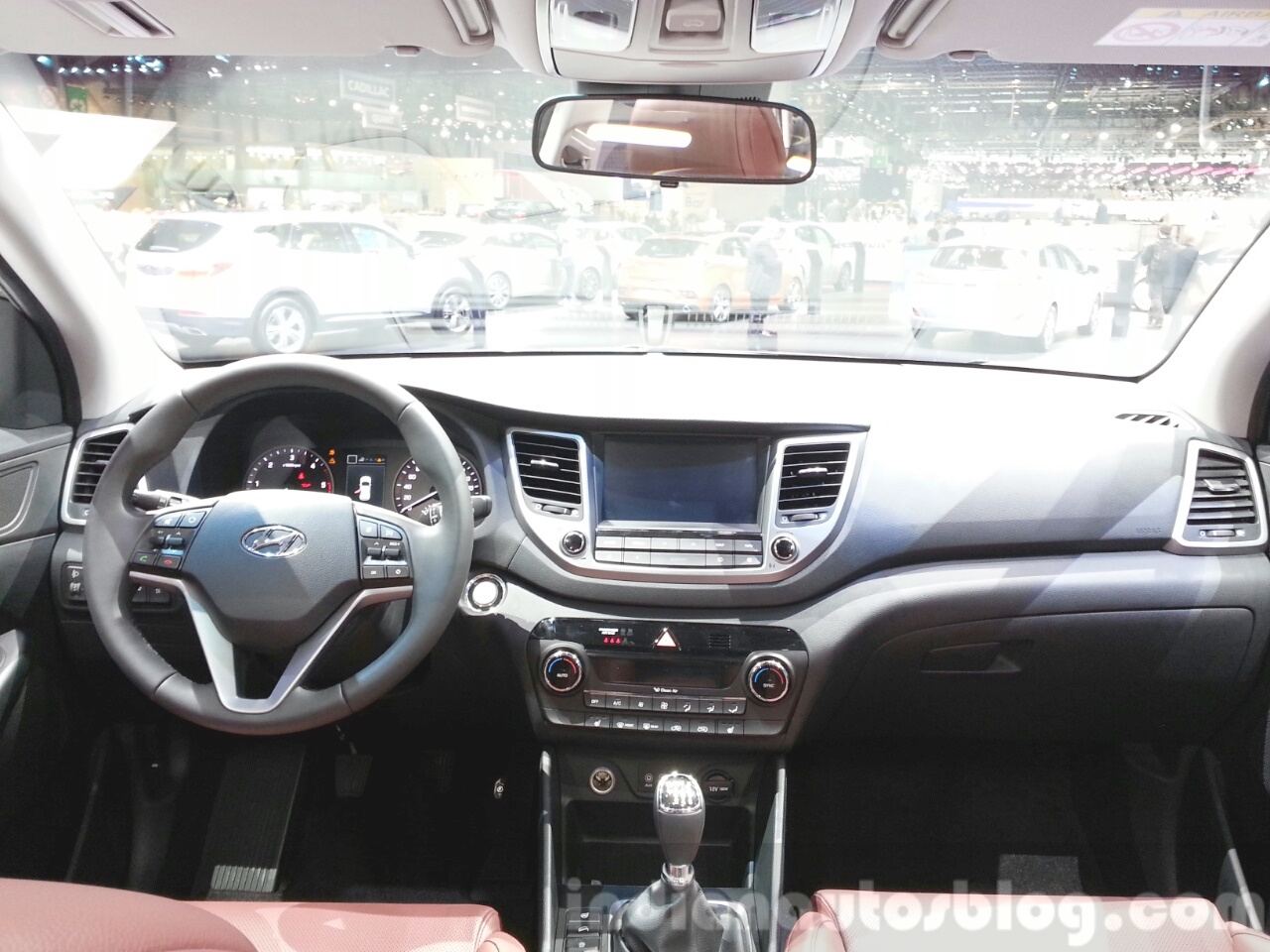
The Tucson's diminutive dimensions help it achieve a tidy turning circle, and in general, the Tucson gives you the comfort of a bigger crossover without feeling as large. The 2015 Hyundai Tucson has an unusually stylish cabin, highlighted by a sleek dashboard that complements the exterior's striking lines. Unfortunately, the Tucson's outward visibility is compromised by its organic pinched-at-the-edges side windows and relatively small rear glass. The dashboard controls are generally clearly labeled and simple to use, especially with the optional 7-inch high-resolution touchscreen interface. The default 4.3-inch touchscreen on the SE and Limited is less impressive, but still a nice bit of standard technology at this modest price point. Up front, a tilt-and-telescoping steering wheel finally is standard, so tall drivers should be able to get a comfortable grip in every Tucson.
The rear seat, however, is a bit smaller than the norm, and although it features reclining 60/40-split seatbacks, the bench still doesn't slide fore and aft, which would be handy in the compact Tucson for optimizing the balance of passenger and cargo space. To be fair, the 25.7 cubic feet of cargo room behind the Tucson's rear seatbacks is useful; so is the 55.8 cubic feet with those seatbacks folded down (even though they don't fold completely flat). But compared with segment rivals like the Honda CR-V and the Toyota RAV4, the Tucson's hauling capacity falls well short. Edmunds expert review process This review was written by a member of Edmunds' editorial team of expert car reviewers.
Our team drives every car you can buy. We put the vehicles through rigorous testing, evaluating how they drive and comparing them in detail to their competitors. We're also regular people like you, so we pay attention to all the different ways people use their cars every day. We want to know if there's enough room for our families and our weekend gear and whether or not our favorite drink fits in the cupholder. Our editors want to help you make the best decision on a car that fits your life.
By, on October 14, 2013, 15:00 The second generation was announced in 2009 and the only update it received was back in 2011 when the old GL trim was replaced by a new GLS version. Things are completely different for the 2014 model year though, as the Tucson was updated with some minor changes on both the exterior and the interior, but under the hood it received two new, more efficient engines.
The 2014 Tucson will be ’s first vehicle on the American market to be powered by the new 2.0-liter Nu GDI engine, with other models to follow at a later point. Next to the new engines, the 2014 Tucson is also offering an all-new SACHS Amplitude Selective Damping (ASD), Hyundai’s Blue Link safety, service and infotainment telematics system, two-stage reclining rear seats and third-generation navigation with a larger seven-inch touchscreen display and HD Radio technology. For 2014 model year the Tucson will be offered in three trim levels: GLS, SE and Limited with prices ranging from $21,450 to $27,700. Updated: Hyundai announced prices for the 2015 Tucson which is now available in dealerships. The model received pretty much no changes for the 2015 model year, so prices remained unchanged: $21,500 for the base GLS version and up to $27,800 for the Limited edition. Details after the jump.
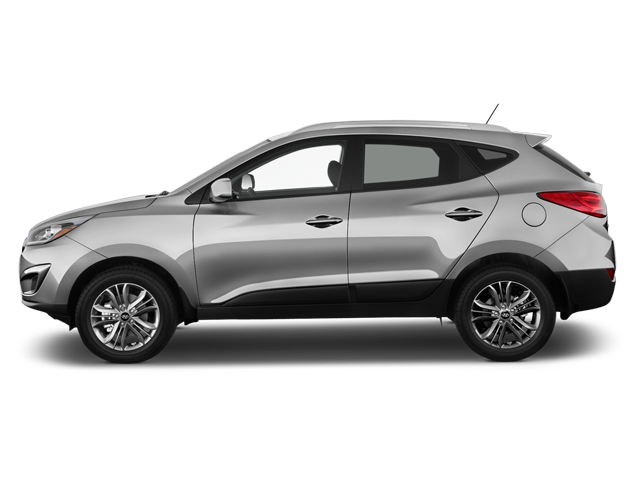
Click past the jump to read more about the 2014 Hyundai Tucson. For the 2014 model year the Tucson was updated with new projector headlights with LED accents and available wraparound LED taillights. These new elements are combined with the usual Hyundai family hexagonal front grille, aggressive lower air intake, sculptured hood creases and sleek greenhouse. Depending on the model, customers can customize their models with chrome accents or roof rack rails for an even more sportier, aggressive look.
Updates on the interior are limited to the addition of new, beige and brown colors, plus an upgraded instrument panel and upper door trim materials for the SE and Limited models. The rest of the interior remains unchanged and will include the usual blue lighting, tilt and telescopic steering wheel, steering wheel mounted audio and cruise controls, power windows, power door locks, fold-away mirrors and remote keyless entry with alarm and panic button. Most of the updates for the 2014 model year were made under the hood where Hyundai added two new engines: a 2.0-liter Nu and 2.4-liter Theta II GDI inline four-cylinder engines as a replacement for the previous Multi Port Injection (MPI) engines.
The new 2.0-liter Nu GDI engine produces an estimated 164 horsepower at 6,200 rpm and 151 pound-feet of torque at 4,000 rpm and for the first time it is available in both FWD and AWD configurations. Thanks to the new engine the base Tucson will deliver a fuel economy of 23 mpg on city driving - up from the previous 22 mpg. The more powerful versions are powered by a 2.4-liter Theta II GDI engine that delivers a total of 182 horsepower and 177 pound-feet of torque. Both engines are combined with a six-speed automatic transmission with SHIFTRONIC manual control. 2014-2015 Hyundai Tucson - Drivetrain/Specifications. 2.0L Placement GLS Type GDI DOHC with CVVT Inline 4-cylinder Materials Aluminum block and heads Displacement 2.0 liters/ 1998 cc Horsepower 164 HP @ 6200 rpm Torque 151 lb-ft @ 4000 rpm Bore & Stroke 86 x 86 mm Valves per cylinder 4 Compression Ratio 11.5 2.4L Placement SE/Limited Type GDI DOHC with CVVT Inline 4-cylinder Materials Aluminum block and heads Displacement 2.4 liters/ 2359 cc Horsepower 182 HP @ 6,000 180 HP @ 6,000 – PZEV Torque 177 lb-ft @ 4000 176 lb-ft @ 4000 - PZEV Bore & Stroke 88 x 97 mm Valves per cylinder 4.
Vehicle 2014 Tucson 2014 CR-V 2013 Rogue 2013 RAV4 2014 Escape 2014 CX-5 2014 Forester X Displacement 2.4L 2.4L 2.5L 2.5L 2.5L 2.0L 2.5L GDI Yes No No No No Yes No Horsepower 182@6,000 185@7,000 170@6,000 176@6,000 168@6,000 155@6,000 170@5,800 Torque (lb.-ft.) 177@4,000 163@4,400 175@4,400 172@4,100 170@4,500 150@4,000 174@4,500 A/T 6-speed 5-speed CVT 6-speed 6-speed 6-speed CVT EPA fuel economy FWD A/T 21/28/24 23/31/26 23/28/25 24/31/26 22/31/25 25/32/27 24/32/27 (AWD) Emissions PZEV/ULEV ULEV PZEV/LEV ULEV LEV ULEV PZEV/LEV Conclusion. Press Release The Hyundai Tucson, known for its combination of style and function, adds even more value in 2014 with advanced 2.0-liter Nu and 2.4-liter Theta II Gasoline Direct Injection (GDI) engines, enhancing torque and engine responsiveness.

With GDI standard on Tucson, like its big-brother Santa Fe, every Hyundai CUV now features this performance-enhancing technology. Tucson is the first Hyundai to receive the 2.0-liter Nu GDI engine in the United States. It will be applied to other models later in the 2014 model year. Tucson’s new GDI engines are complemented with all-new standard SACHS Amplitude Selective Damping (ASD) for optimum ride, handling and driving comfort. 2014 Tucson also adds a host of available new refinements, including Hyundai’s Blue Link safety, service and infotainment telematics system, two-stage reclining rear seats and third-generation navigation with a larger seven-inch touchscreen display and HD Radio technology.
The 2014 Tucson will be available at Hyundai dealerships in fall of 2013. 2.0-LITER NU GASOLINE DIRECT INJECTION ENGINE. In a segment where GDI engines are not normally found, the addition of the 2.0-liter Nu GDI engine to the Tucson GLS will be popular with consumers. The new 2.0-liter Nu GDI engine produces an estimated 164 horsepower at 6,200 rpm and 151 lb.-ft. Of torque at 4,000 rpm. Performance gains were achieved by equipping the engine with an efficient, responsive GDI fuel delivery system. In the Tucson, the engine delivers higher peak torque at lower rpm for enhanced everyday driving dynamics when compared with a similar multi-port fuel injected engine.
Equipping the Nu four-cylinder engine with GDI ensures a good balance between performance and fuel economy. The entry-level 2014 Tucson GLS with the 2.0-liter Nu engine will also offer AWD for the first time. AWD was not available on the entry-level 2013 Tucson GL. The Tucson with the 2.0-liter GDI engine achieves an EPA estimated 23 mpg city fuel economy figure with a ULEV emissions rating. Tucson buyers looking for more horsepower and torque can choose the 2.4-liter Theta II GDI engine, which has been well tested in the Sonata and Santa Fe Sport. This engine has the ability to tow up to 2,000 pounds.
With 182 horsepower and 177 lb-ft. Of torque, Tucson SE and Limited deliver strong EPA estimated fuel economy of 24 mpg combined, along with outstanding real-world performance feel. All Tucson models utilize a six-speed automatic transmission with SHIFTRONIC® manual control. For 2014, the gated gear shifter has been upgraded to a straight-type with boot for ease of use. Tucson models feature Hyundai’s Active ECO System. Active ECO modifies engine and transmission control to smooth out throttle response.
By turning on Active ECO, drivers can realize up to a 5-7 percent increase in real-world fuel economy. REFRESCHED EXTERIOR DESIGN New projector headlights with LED accents and available wraparound LED taillights stand out from Tucson’s flowing lines, full surfaces and muscular presence. This athletic design language is highlighted by bold, dynamic, graphic elements such as the Hyundai family hexagonal front grille, aggressive lower air intake, sculptured hood creases and sleek greenhouse. Chrome grille accents and door handles lend sophistication to the top-of-the-line Tucson Limited. The profile of Tucson features a sports car-like theme with a double-zigzag treatment for the wheel arches that wrap around the standard 17-inch alloy wheels or the new 18-inch alloy wheel design.
Roof rack rails are now available with optional panoramic sunroof and standard shark-fin antenna on Tucson Limited. THOUGHTFUL INTERIOR DESIGN NOW WITH TWO STAGE RECLINING REAR SEAT.
The Tucson has always had outstanding rear legroom and now second row passengers can recline their seats for even more comfort. The 2014 Tucson continues to have more passenger volume than Rogue and Escape at 101.9 cubic feet. The spacious cabin on Tucson Limited is further enhanced for all passengers by the available panoramic sunroof. New beige and brown interior colors add a more premium look and an upgraded instrument panel and upper door trim materials add a more premium feel on SE and Limited models. The high-tech cockpit comes standard with Hyundai’s signature blue lighting, tilt and telescopic steering wheel, steering wheel mounted audio and cruise controls, power windows, power door locks, fold-away mirrors and remote keyless entry with alarm and panic button. Now even the front cupholders are illuminated with blue light for nighttime drives.
Another premium feature in the Tucson Limited is dual front automatic temperature control with CleanAir Ionizer that helps to kills germs within the system when the heater or air conditioner is running. Other available features include leather seating surfaces, heated front seats, power driver seat with lumbar support, automatic headlights, front wiper de-icer and new floor console-mounted rear vents.
The 2014 Tucson’s athletic shape is complemented with agile handling. Tucson uses MacPherson strut front and multi-link rear suspension systems for more precise wheel control and a smoother ride. Fiat panda 2015 owners manual. All four wheels are controlled by coil springs and Sachs Amplitude Selective Damping (ASD), allowing tuning flexibility at smaller damper displacements. The ASD suspension provides: Improved ride comfort with more body/wheel control Increased driving comfort without compromised handling Optimized road surface contact The front suspension has a 24.5 mm hollow stabilizer bar to save weight, while the rear suspension has a 15 mm (AWD) & 17 mm (FWD) solid stabilizer bar. Larger stabilizer bars help to keep the vehicle flat during cornering and help provide quick turn-in response. Due to the suspension geometry and wider track width that enables greater turn angles, Tucson’s turning circle is 34.7 feet – an advantage Tucson drivers will appreciate in their daily driving and parking.
In fact, Tucson’s turning diameter bests Honda CR-V and Ford Escape. THIRD-GENERATION NAVIGATION AND AUDIO TECHNOLOGY. The Tucson Limited offers an optional multifunction seven-inch touch-screen display with navigation.
This third-generation display features a simpler user interface, enhanced voice recognition commands and improved navigation screens. The system is more intuitive for commonly used tasks. Simple pop-up messages now appear to help pair a cell phone and the voice recognition software understands street addresses and cities all in one sentence.
The route screens display speed limits and details the next three maneuvers. One or two button pushes now complete most functions.
Tucson GLS and SE trims have a 160-watt AM/FM/SiriusXM/CD/MP3 audio system with six speakers. This system includes SiriusXM Satellite Radio® and iPod®/USB auxiliary inputs.
The SE and Limited trims come equipped with a 4.3-inch color touchscreen audio with standard rearview camera. An available premium audio system with navigation pumps out 360-watts of sound and includes an external amplifier and subwoofer. It also plays compact discs, accesses digital music files employing Bluetooth streaming audio and allows driver and passenger to access their personal listening devices through the iPod/USB/auxiliary inputs. Bluetooth audio wirelessly streams music from a phone to the audio system. Available HD Radio technology is also equipped with the Navigation system.
An HD Radio icon on the display appears next to the channel frequency to notify the user when a station is broadcasting in HD. Customers can also access additional programming content provided by HD Radio Technology. HYUNDAI ASSURANCE CONNECTED CARE POWERED BY BLUE LINK®. Hyundai’s industry-leading telematics services program, Assurance Connected Care, is standard on all 2014 Tucsons equipped with Blue Link, for three years.
This innovative ownership program provides owners with proactive safety and Car Care services via the Hyundai Blue Link telematics system. These services include Automatic Collision Notification, Enhanced Roadside Assistance, Automatic Diagnostic Trouble Code Notification, Monthly Vehicle Health Report and in-vehicle Car Care maintenance scheduling. Hyundai also recently introduced an all-new mobile app for the Blue Link telematics platform. The mobile app allows subscribers to remotely access various optional Blue Link features and services through compatible mobile devices. Completely redesigned from the ground up, the app has been significantly enhanced from the previous version and boasts a new user experience, faster navigation and innovative new features. Google Android and Apple iOS users can download the app today from Google Play or Apple iTunes, respectively.
Blue Link is an innovative telematics solution that brings seamless connectivity for safety, service and infotainment capabilities and is offered in three packages: Assurance, Essentials and Guidance. World-class weight efficiency was one of the program targets for the 2014 Tucson engineering team.
Ficha Tecnica Tucson 2015 Manual
Hyundai engineers also targeted an outstanding weight-to-power ratio. Having these targets paid dividends in both performance and fuel economy. Tucson’s widespread use of high-strength steel provides increased strength at a lower body weight. High-strength steel allows the four-wheel independent suspension to work optimally. At 3,232 pounds, the automatic transmission equipped Tucson GLS is lighter than its competitors while offering more interior room than Escape.
This weight efficient unibody architecture allows for Tucson to achieve an EPA estimated 29 mpg estimated EPA highway rating. ALL-WEATHER PERFORMANCE. To make Tucson even more versatile, Hyundai engineers added an advanced electronic AWD system. The AWD system will automatically activate under any driving condition when needed, distributing the power equally and optimizing driving performance. Under normal driving, the system only distributes power to the front wheels, thereby reducing fuel consumption.
2015 Hyundai Tucson Repair Manual
The system includes a driver-selectable AWD lock allowing for a 50/50 torque split between the front and rear wheels for off-road and very slippery conditions. The entry-level 2014 Tucson GLS with the 2.0-liter Nu engine will also offer AWD for the first time. AWD was not available on the entry-level 2013 Tucson GL. For even more driver control, the 2014 Tucson features Hyundai’s Hillstart Assist Control (HAC) and Downhill Brake Control (DBC). HAC is designed to minimize rolling backwards on steep ascents. By selecting the DBC switch, the Hydro-Electronic Control unit manages the wheel speed sensors, steering angle sensor and acceleration sensor to maintain control and speed on steep declines without having to use the brake. DBC is not available on any other vehicles in the segment and is typically found on luxury SUVs with much higher price tags.